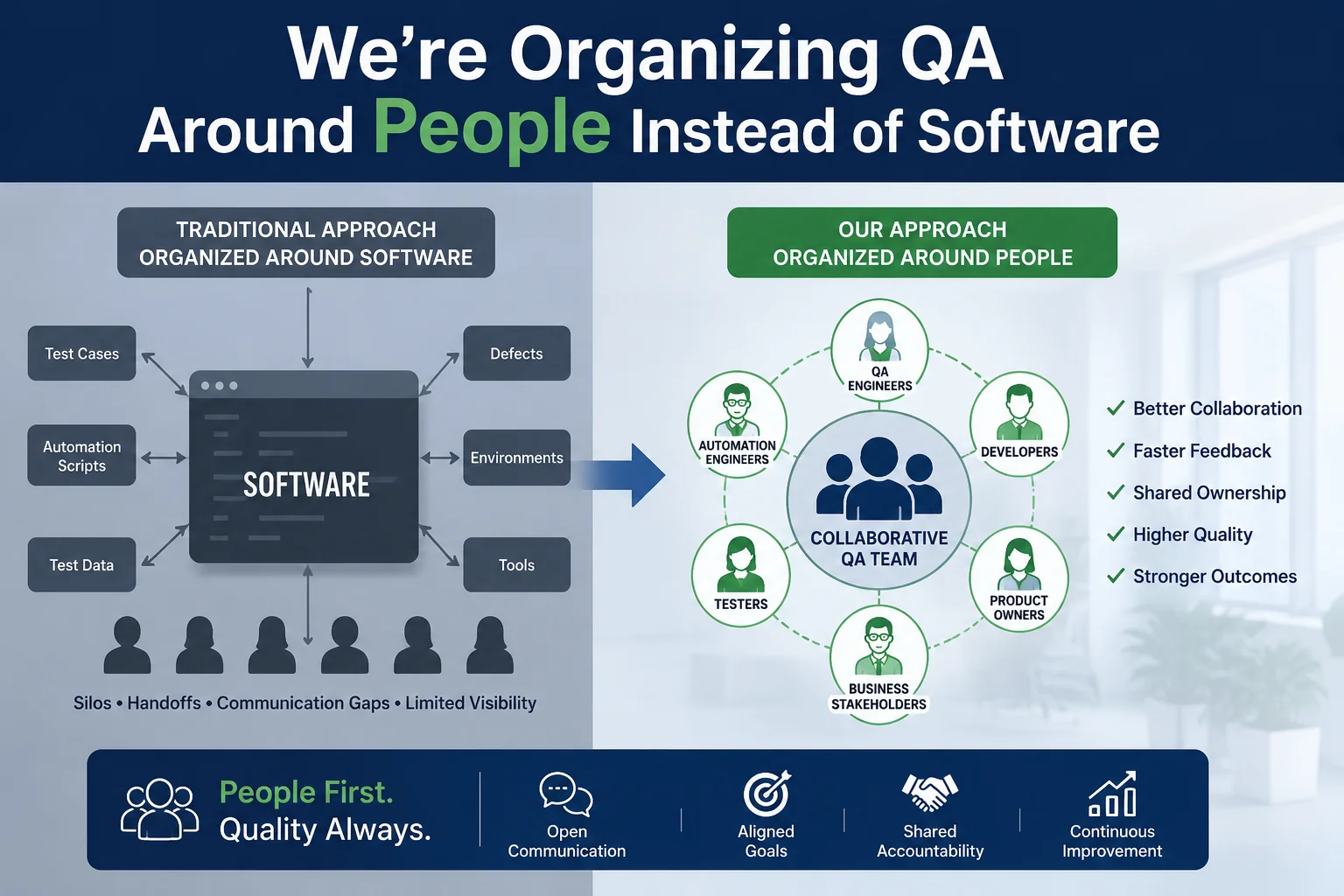
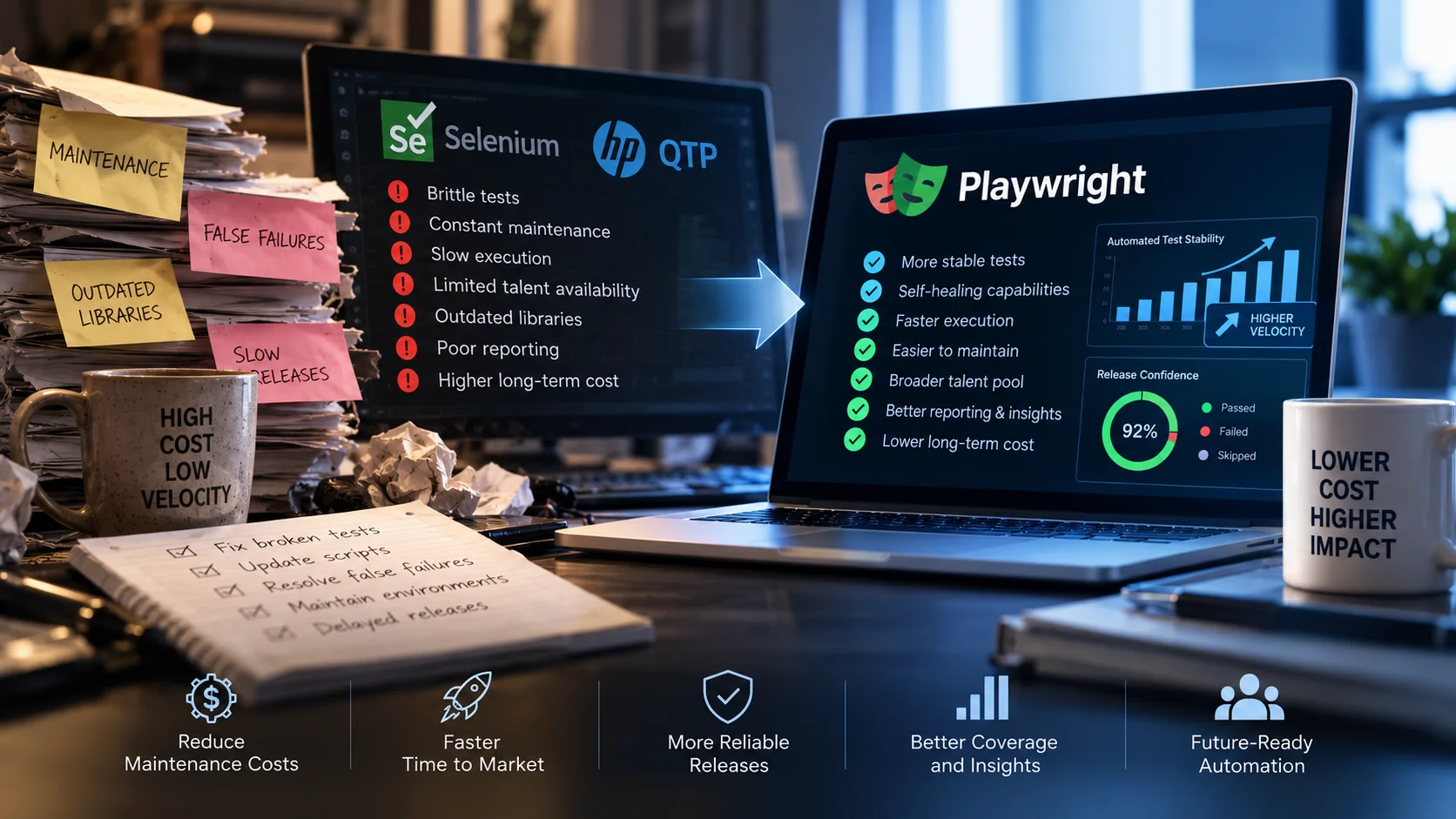
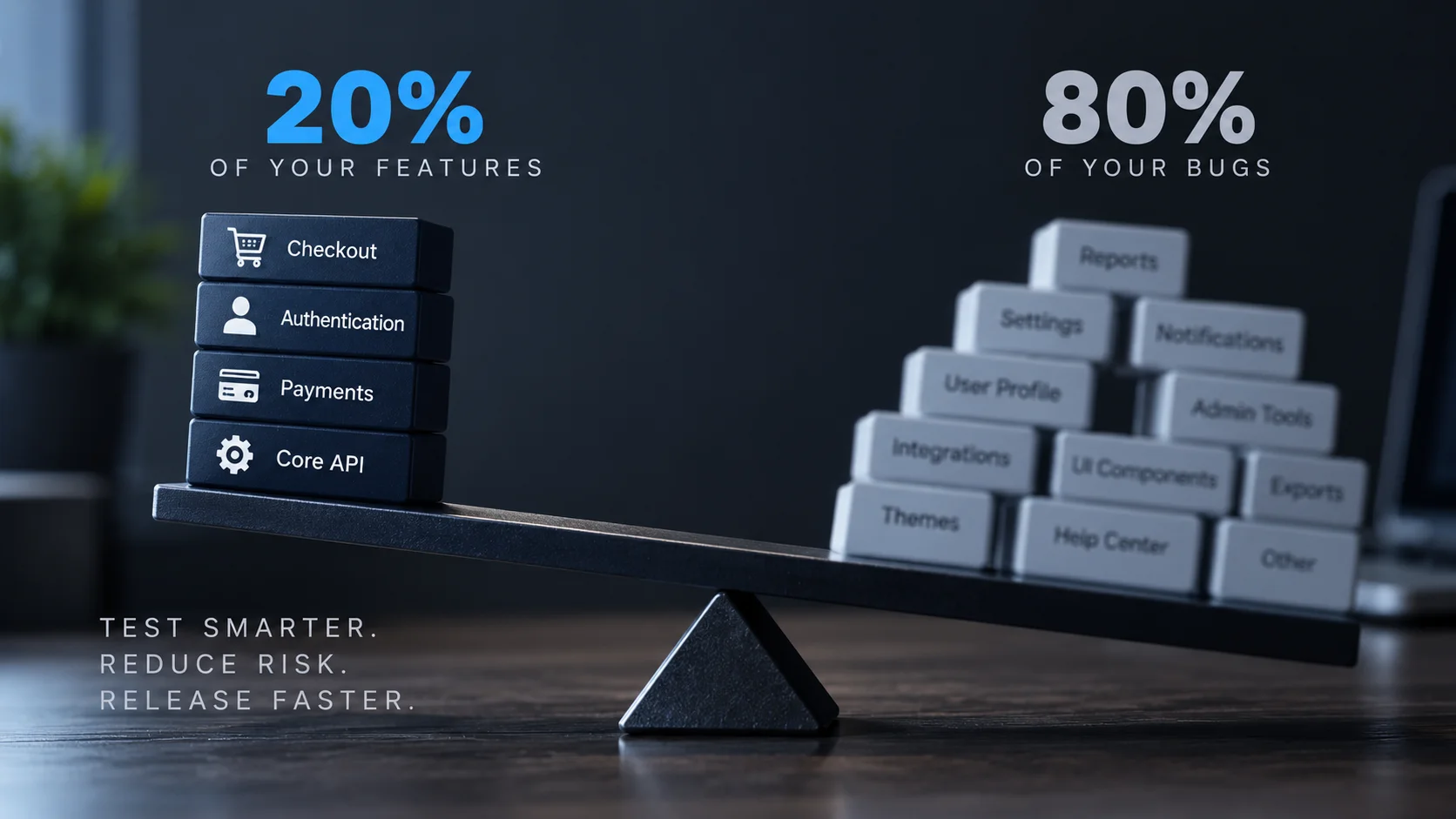
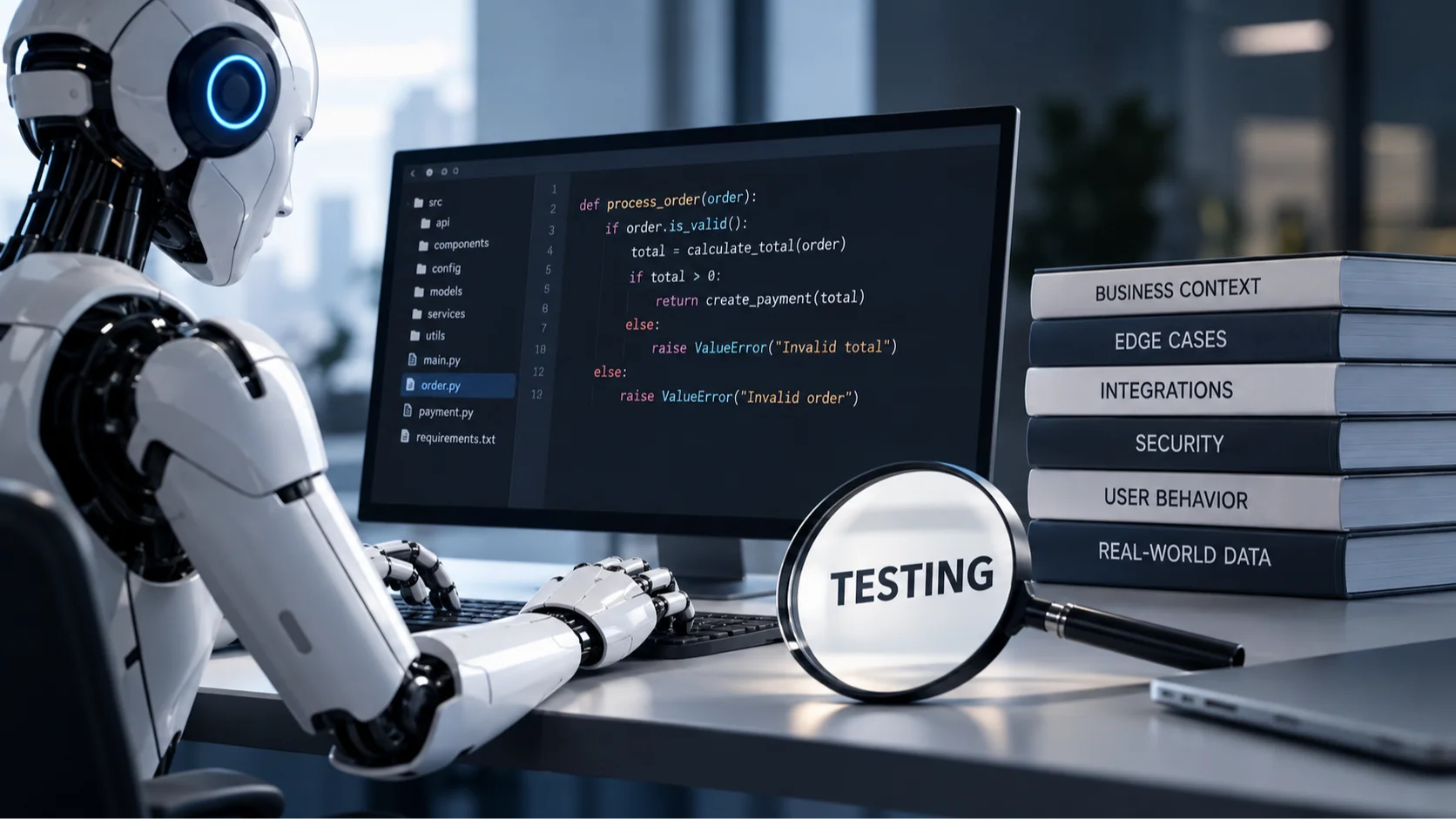
We're Organizing QA Around People Instead of Software Bottom of Form
For nearly thirty years, software organizations have built Quality Assurance teams around people.
ü UI testers.
ü API testers.
ü Automation engineers.
ü Performance engineers.
ü Security testers.
ü Accessibility specialists.
Each discipline became another team, another backlog, another manager, another approval process.
As applications grew, organizations responded by hiring more specialists.
But software has changed.
Cloud-native architectures, microservices, AI-generated code, feature flags, continuous deployment, and dozens of daily releases have created an environment where human coordination has become the bottleneck.
Adding more testers no longer scales.
Adding more meetings certainly doesn't.
The next evolution of software quality isn't another testing team.
It's Quality Orchestration.
Software Doesn't Care About Organizational Charts
Consider what happens when a developer changes a payment workflow.
That single change might affect:
- UI validation
- REST APIs
- Mobile applications
- Security permissions
- Database transactions
- Third-party integrations
- Performance
- Accessibility
- Analytics
Traditionally, each team receives a ticket.
Each team schedules testing independently.
Each team reports results separately.
Then someone manually pieces everything together before a release meeting.
The software doesn't know or care that these responsibilities belong to different departments.
It simply needs to be validated.
The Future Is Event-Driven Quality
Imagine something different.
A developer merges code.
Instead of assigning work manually, an orchestration platform immediately understands what changed.
It automatically determines:
- Which APIs are impacted.
- Which customer journeys require UI Testing.
- Which mobile workflows need validation.
- Which accessibility scans should execute.
- Which regression tests are relevant.
- Whether performance testing is necessary.
- Whether security scans should be expanded.
Nothing waits for a meeting.
Nothing waits for an email.
The system coordinates quality automatically.
That is Quality Orchestration.
The QA Engineer Becomes a Quality Architect
Many people assume orchestration means replacing QA engineers.
It doesn't.
It changes their role.
Today's QA engineer spends too much time:
- Coordinating test execution.
- Maintaining spreadsheets.
- Updating dashboards.
- Chasing environment issues.
- Explaining test failures.
Tomorrow's Quality Engineer will spend more time:
- Designing intelligent quality workflows.
- Defining release policies.
- Building reusable automation frameworks.
- Creating AI prompts for test generation.
- Improving risk models.
- Analyzing production quality trends.
- Coaching development teams.
Less administration.
More engineering.
Orchestration Is More Than Automation
Automation executes predefined tasks.
Orchestration makes decisions.
Think about the difference.
Automation says:
Run Regression Suite A.
Orchestration asks:
- Should Regression Suite A even run?
- Which tests add value today?
- Which customer workflows changed?
- What business capability is at risk?
- Do we already have enough evidence to release?
Automation improves efficiency.
Orchestration improves judgment.
AI Will Become the Quality Conductor
Artificial Intelligence is already writing code.
Soon it will also coordinate software quality.
Future orchestration engines will continuously analyze:
- Requirement changes
- Pull requests
- API modifications
- Production telemetry
- Defect history
- Customer behavior
- Test Coverage Analytics
- Quality KPIs
Then they'll automatically build the optimal testing strategy for every deployment.
Not the biggest strategy.
The smartest one.
What This Means for Engineering Leaders
The role of leadership also changes.
Instead of reviewing disconnected reports from multiple teams, engineering leaders gain a single view of software health.
Imagine opening one dashboard and immediately knowing:
- Release Readiness
- Business Risk
- Test Coverage
- Defect Trends
- Production Stability
- Quality Confidence
No spreadsheets.
No status meetings.
No guessing.
Just evidence.
The Next Decade Will Separate Coordinated Organizations from Automated Organizations
Many companies will continue investing in more testing tools.
Others will invest in connecting everything they already have.
Those organizations will release software faster not because they test more but because they eliminate the friction between quality activities.
Quality becomes a continuous, intelligent flow instead of a series of disconnected checkpoints.
That's the real promise of Quality Orchestration.
Key Takeaways
- The future challenge isn't writing more automated tests it's coordinating quality across increasingly complex software ecosystems.
- Quality Orchestration transforms disconnected testing activities into one intelligent, event-driven workflow.
- QA engineers will evolve from test executors into quality architects, focusing on strategy, governance, and engineering excellence.
- AI will increasingly orchestrate quality by determining what to test, when to test, and why it matters.
- Organizations that master orchestration will reduce release friction, improve developer productivity, and deliver software with greater confidence.
Final Thought
Over the last twenty years, software testing has become increasingly automated.
Over the next twenty years, it will become increasingly orchestrated.
The companies that thrive won't be the ones with the largest QA teams or the biggest automation suites.
They'll be the organizations that can coordinate every quality signal across people, platforms, and pipelines into one intelligent system that continuously answers the most important question in software delivery:
"Can we release with confidence?"