Quality Intelligence Is the Missing Layer in Modern Software Engineering
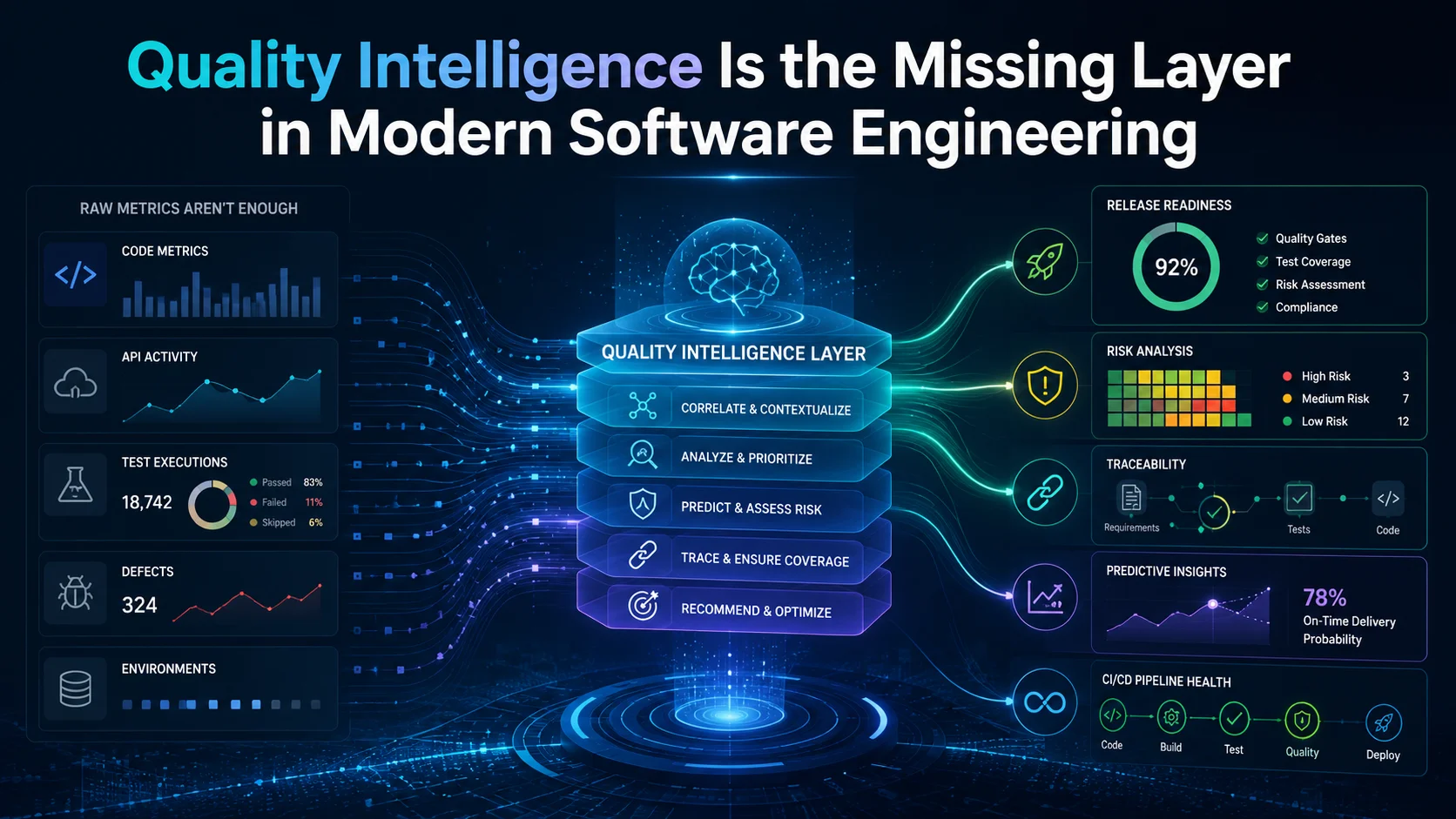
Software engineering has become deeply obsessed with metrics. On any given day, engineering teams can tell you their precise deployment frequency, sprint velocity, code coverage, test execution rates, and active defect counts. Yet, despite collecting more data than at any other point in technological history, organizations still routinely suffer from high-profile production outages, customer-impact defects, and failed releases. The underlying problem is not a lack of data; it is that most organizations have never learned how to transform raw testing metrics into true business intelligence. We have mastered the art of measuring everything, but we have failed to measure what actually matters. This is where Quality Intelligence changes the conversation.
Redefining Software Quality: From Testing to Intelligence
Quality Intelligence is the practice of converting raw quality data into actionable business decisions. Traditional Quality Assurance focuses on retrospective, transactional questions: How many tests passed? How many defects are open? What is our automation percentage? Quality Intelligence, by contrast, answers the strategic questions that determine business survival: Are we truly ready to release? Which critical business capabilities remain at risk? Which customer journeys have insufficient coverage? Which APIs have become unstable, and which upcoming deployments introduce the greatest operational risk? Answering these questions requires looking at software quality as a holistic ecosystem rather than an isolated phase at the end of a sprint. In most organizations, software delivery is highly fragmented. Requirements live in one planning system, test cases in another, defects in a third, and production incidents in a completely separate monitoring tool. Because these systems do not talk to each other, executive reporting is built manually through spreadsheets and guesswork. Each silo provides a tiny slice of information, but none provides the complete picture. By connecting every stage of the software development lifecycle—from initial business requirements and automated API testing to accessibility compliance and production incident logs—Quality Intelligence builds a unified, continuous feedback loop. It shifts the paradigm from isolated QA reporting to continuous, automated Software Quality Analytics.
Quality Intelligence Across the Software Development Lifecycle

The Illusion of the Pass Rate
To understand why this shift is necessary, consider a simple scenario involving two release candidates. Release A executes 8,000 automated tests with a stellar 99% pass rate. Release B executes only 2,500 tests with a seemingly weaker 95% pass rate. Under a traditional QA dashboard, Release A is green-lit instantly, while Release B is flagged for review. However, a Quality Intelligence assessment reveals a completely different reality. It shows that Release A's tests were highly repetitive, missed several recently modified APIs, ignored critical mobile user workflows, and left three high-risk business requirements completely unvalidated. Meanwhile, Release B’s 2,500 tests were dynamically targeted, focusing directly on the highest-risk functionality, recently changed code, and core transaction paths. Despite the lower pass rate, Release B is actually the vastly safer deployment. Because traditional dashboards rely on raw, context-blind numbers, they consistently reward the illusion of quality over actual systemic health.
The Four Pillars of Quality Analytics
Transitioning to a Quality Intelligence model requires engineering leaders to anchor their telemetry around four modern, decision-focused capabilities:
1. Continuous Release Readiness Every deployment should be guided by a comprehensive Release Readiness Assessment. Instead of simply asking whether the testing team "finished their checklist," organizations must run multidimensional assessments that evaluate business risk, automated test coverage, active defect severity, production environment stability, and strict Requirement Traceability. The ultimate goal is to measure confidence, not completion.
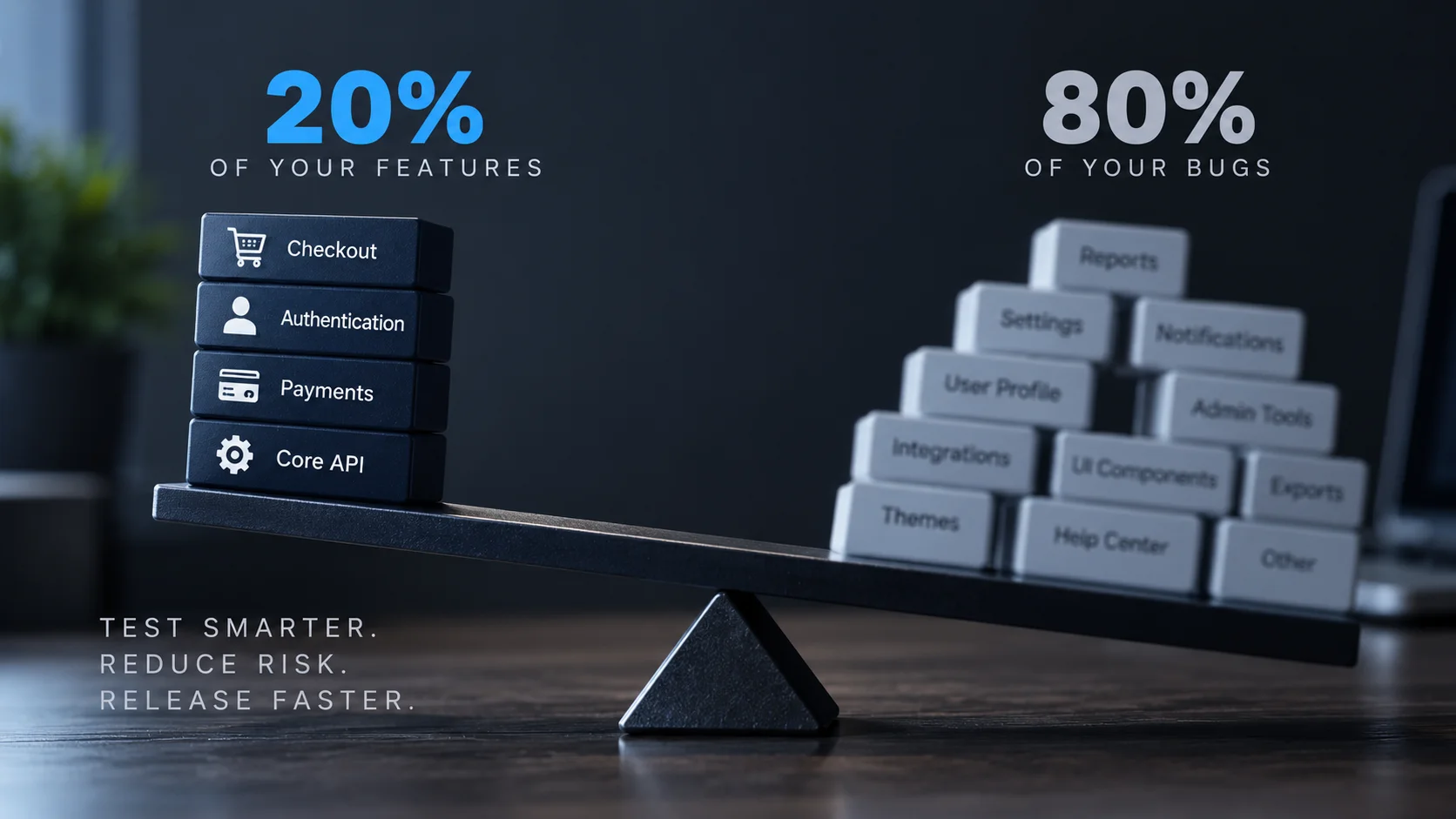
2. Strategic Quality Risk Analysis Not all bugs are created equal. A minor alignment issue on an internal admin page should never halt a release, whereas a subtle latency spike in a checkout API is catastrophic. Quality Risk Analysis uses historical failure patterns, change frequency, architectural complexity, and customer telemetry to dynamically route testing resources where they will mitigate the most business risk.
3. Comprehensive Test Coverage Analysis True coverage is about breadth and depth, not just unit test percentages. An effective Test Coverage Analysis evaluates how well a suite covers business processes, user interfaces, API endpoints, mobile device performance, and accessibility compliance. Organizations rarely experience critical failures because they executed too few tests; they fail because they executed the wrong ones.
4. Proactive Quality Health Monitoring Quality must be treated as a live, continuous engineering metric rather than a gate checked immediately before a release. Continuous Quality Health Monitoring scans for early warning signs of systemic decay, such as rising defect trends, flaky automation scripts, declining regression stability, and eroding pipeline velocity, allowing teams to address technical debt before it impacts the customer.
The Era of AI Quality Intelligence
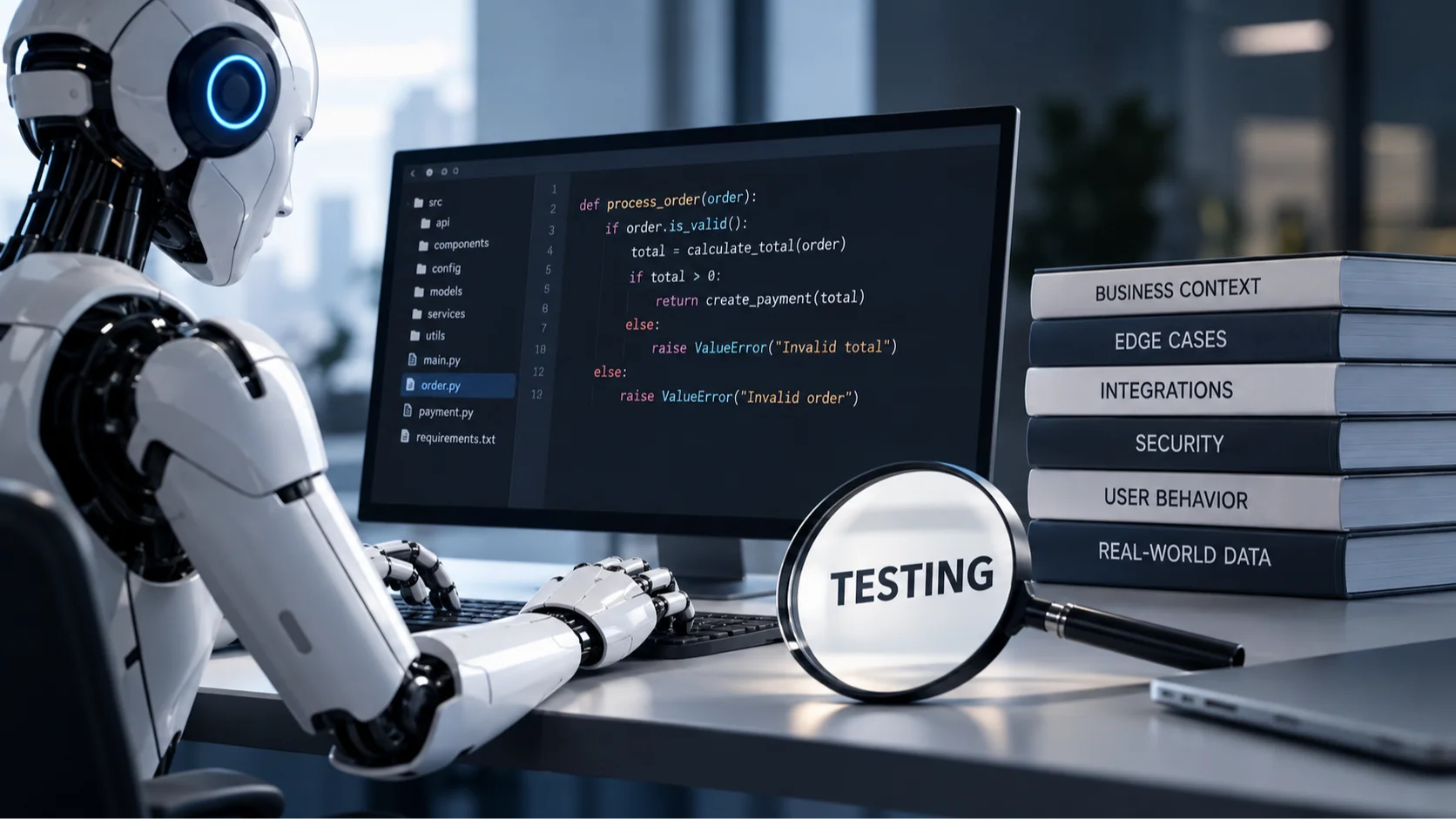
The rise of generative AI will only accelerate the necessity of this intelligence layer. As AI-powered development tools generate code at unprecedented speeds, they will also create an overwhelming volume of software changes. Simply writing more automated test scripts is an unsustainable response to this surge; trying to test everything will inevitably break the deployment pipeline. The answer is not more testing, but better intelligence. Emerging AI Quality Intelligence models will automatically analyze codebase changes, predict high-risk areas, pinpoint test coverage gaps, and evaluate the actual effectiveness of automated test suites. Ultimately, testing tells you what happened, but Quality Intelligence tells you what to do next. Organizations that continue to measure software quality through fragmented, manual reports will quickly find themselves overwhelmed by the speed of AI-driven delivery. The teams that succeed will be those that integrate Quality Engineering, Software Quality Analytics, and predictive risk profiling into a single, continuous intelligence platform. Software quality is not defined by the volume of tests you run. It is defined by the absolute confidence you have when you press "deploy."